

News

Hydraulic Modeling of Complex Fluids
Modeling of complex fluids like non-Newtonian fluids or settling slurries should not be intimidating. The basic steps are very similar to that of conventional hydraulic models for single-phase, Newtonian fluids like water.
Overcoming Obstacles to Treat Ultrapure Water in Automotive Manufacturing
JNE Environmental has a lot of history and experience with fluoride removal techniques from wastewater in the automotive sector; however, the wastewater from this particular client is unique in that their wastewater stream is actually ultrapure water. Ultrapure water poses a challenge because, at this purity, the water behaves like a solvent making it difficult to remove targeted impurities, such as fluoride.
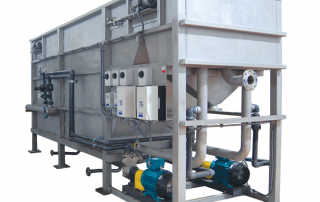
Dual DAF Wastewater Treatment System for a European Plastic Recycling Company’s New Facility
JNE Environmental has designed and is currently manufacturing a 40 m3/hr dual Dissolved Air Flotation (DAF) wastewater treatment system for a European plastic recycling company that is building a new facility in Canada. This plastic recycling process represents a unique and significant impact to the environment and JNE is proud to play a role in the process. This project is the largest project in JNE Environmental’s history and is commissioning in late 2019.
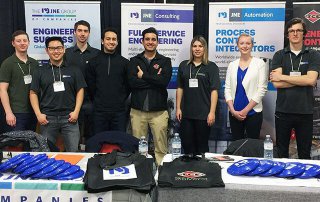
JNE at Connect to Careers 2019
The JNE Group participated in the annual Connect to Careers job fair at the FirstOntario Centre in Hamilton, Ontario. From new grads to seasoned professionals, the event is a great opportunity to connect and network with local talent. Representatives from JNE and TCE groups and engineering disciplines were on-hand to educate thousands of attendees about The JNE Group's services, culture, and potential career opportunities.
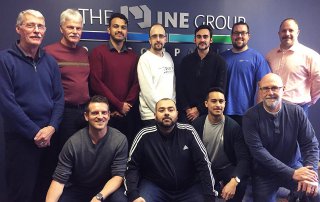
JNE’s Inaugural Movember Challenge
Our team at JNE set out to raise awareness about some of the biggest health issues faced by men, including prostate cancer, testicular cancer, and mental health and suicide prevention by growing our moustaches throughout the month of November. Through this initiative we have learned more about each other, sharing stories and experiences, and we are stronger for it.

Introducing our new Subject Matter Experts (SMEs)
With many years of experience in their respective fields, our Subject Matter Experts bring a wealth of knowledge to our clients projects and mentorship to our teams — contributions which enable JNE to continue providing world-class, multi-disciplinary engineering services for projects across North America.
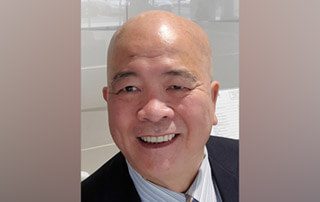
Joe Ng recognized as AIST Life Member
Joe Ng, founder of the JNE Group of Companies, has been recognized as a Life Member by the Association for Iron & Steel Technology (AIST). Life Membership with the Association for Iron & Steel Technology is awarded after 35 consecutive years of membership. Please join us in congratulating Joe for this recognition!
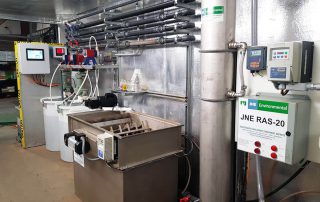
Pilot Plant Automation and Upgrades
Continuously looking to improve our products, we identified an opportunity to automate our wastewater treatment pilot plant, reducing the required labour to maintain efficient operation. We also installed mixed reaction tanks below the existing plug flow reactor and made the various chemical reaction systems selectable via a tee branch system.