

News

Safety Considerations for Pneumatic Pressure Testing
Safety considerations for pneumatic pressure testing. Safety considerations for pneumatic pressure testing. Published October 2023 Keywords Pneumatic Pressure Test Stored Energy Minimum Safe Distance Scaled Consequence Factor ASME PCC-2 Repair of Pressure Equipment and Piping Share Summary Pneumatic pressure testing poses a significant health and safety risk due to the stored energy of the test gas, especially on larger volume piping. This can affect the operations of clients or construction activities and should be considered when specifying pneumatic pressure tests. Safe distances for personnel are proscribed in ASME PCC-2 Repair of Pressure Equipment and Piping. Minimum safe distance is 30m (100ft) and increases with stored energy and risk of fragments being thrown. The safe distance can be reduced utilizing mitigation techniques included in ASME PCC-2. When specifying a pneumatic pressure test always consider stored energy and look to eliminate the need for the testing or substitute hydrostatic. Reducing the safe distance below 30m (100ft) should always be a last resort. Codes and Standards ASME PCC-2 Repair of Pressure Equipment and [...]

Bowl For Kids’ Sake 2018
Big Brothers Big Sisters' Bowl for Kids' Sake is an occasion that draws friends, family, and co-workers together for an evening of bowling in support of Big Brothers Big Sisters mentoring programs for local children and youth facing adversities. By raising funds from various other company events throughout the year, JNE was able to sponsor three teams to participate in this year's event.
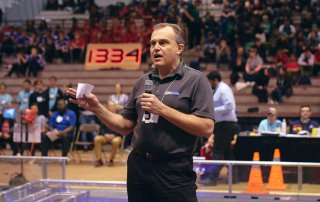
JNE sponsors FIRST Robotics Canada District Competition at McMaster University
The FIRST Robotics Canada District Competition is one of the country's top science, technology, and engineering competitions for high-school students. The JNE Group of Companies was proud to attend the event at McMaster University for the second year in a row, once again sponsoring the student's Preparation Pit.

JNE supports Food4Kids Hamilton
Food4Kids Hamilton was created to address and diminish child weekend hunger in Hamilton and Halton. Packages of healthy food are prepared by volunteers and delivered to schools each Friday to ensure children have nourishment over the weekend. At the end of 2017, JNE donated 100% of the funds raised from our holiday party as well as additional funds raised from various events throughout the year.
JNE Consulting achieves ISO 9001:2015 certification
JNE Consulting has successfully completed the transition to ISO 9001:2015 from ISO 9001:2008. This accomplishment is a testament to the positive engagement of all JNE staff and clearly demonstrates our ongoing commitment to our clients to provide the high-quality engineering and project services that are synonymous with JNE Consulting.
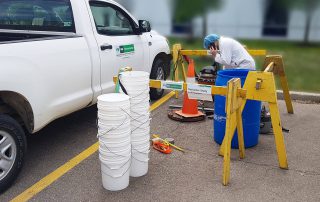
Foam Suppression System for Soap Manufacturer
A soap manufacturer in the Toronto area had issues with excessive foaming in production areas, wastewater tanks, and sewer systems on their property. They were consuming significant volumes of de-foaming chemicals and still encountering issues. They turned to JNE Environmental for a plant assessment and solution.
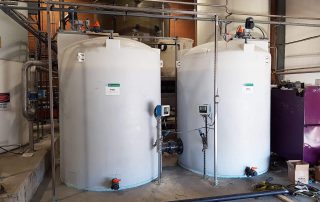
Achieving Sewer Compliance through pH Correction
A beverage manufacturer in the Toronto area was facing notices of violation from their municipality stating their wastewater pH was too acidic and out of compliance. Their existing treatment system was being overloaded with high flow rates and could no longer keep up. That is when they turned to JNE Environmental for assistance.
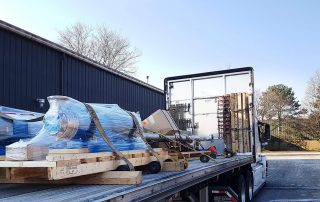
Rental Unit Boosts Treatment Power for Steel Manufacturer
A prominent steel coke manufacturer in Detroit reached out to JNE Environmental for assistance. Their dissolved air treatment system was not capable of floating their sludge waste and was performing well below acceptable standards. JNE proposed a new, properly engineered recycled air stream (RAS) system to deliver sufficient dissolved air into their chemically treated waste stream.