


Hydrogen Vent Sizing and Design
Complying with associated code regulations and withstanding wind loads.
Hydrogen Vent Sizing and Design
Published June 2026
Keywords
Share
Background
Hydrogen is a lightweight, flammable, colourless substance. Discharges of gaseous hydrogen to the atmosphere shall be disposed of through an engineered vent system that complies with the associated code regulations and can withstand wind loads. Hydrogen-air mixtures are extremely easy to ignite — thus, ignition at the outlet of a vent should be considered as a design event rather than an emergency. This project example works with gaseous hydrogen at atmospheric temperatures.
AFT Arrow was used for flow modelling purposes to determine the minimum pipe diameter required to avoid choked flow in the vent line. The calculations for vertical height requirements were taken from the following codes mentioned below. This case study aims to highlight the extensive code review and design calculations required when designing a hydrogen vent for a client.
Project Example
JNE Consulting was asked to design the hydrogen vent stack, supports and provide drawings ready for fabrication. The major area of concern was the vertical height of the stack, horizontal clearances needed, and vent diameter to allow for the flow required. The Civil/Structural department was also involved in the wind load calculations which determined the needs for base support, guy wires, or bracing.
Solution/Best Practice
Flow & Vent Stack Size
The maximum flow in the vent must be accurate and known since it will be the basis of the height and safety distance calculations.
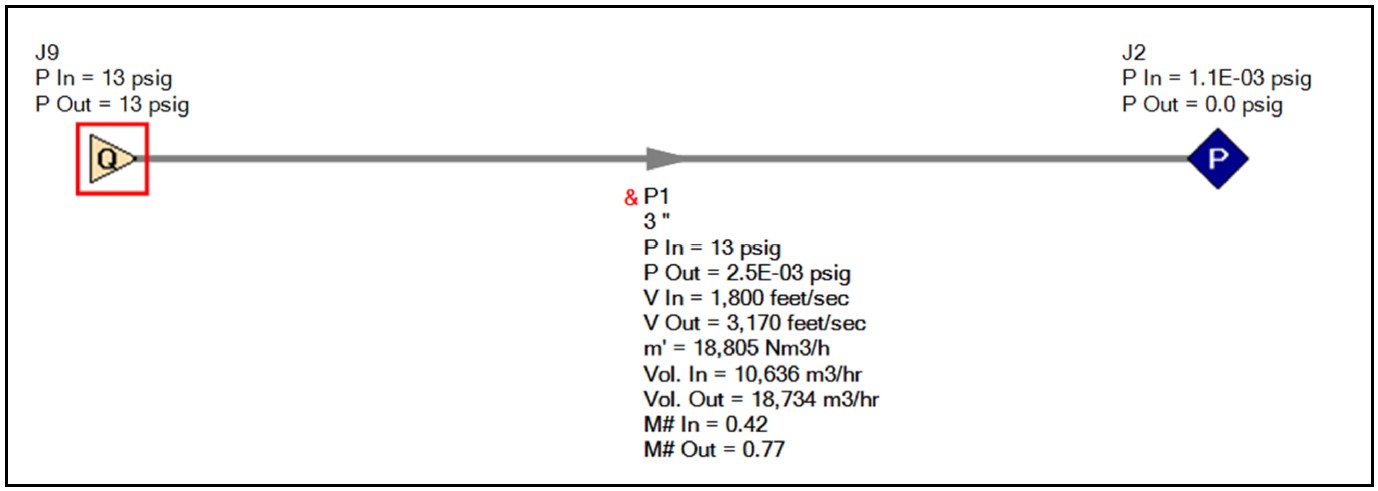
In this case, the client did not provide sufficient information on the maximum flow rates from the individual vent lines connecting to the stack. Thus, AFT Arrow was used to model these lines assuming that maximum flow will be limited by sonic velocity (most conservative approach). Figure 1 below summarizes the total flow required of the vent line, thus resulting in a pipe size of 3” to prevent choked flow (where Mach # < 1).
Deflagaration/Detonation Considerations
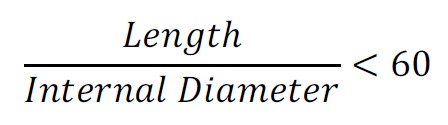
- Design emergency vent to recommended ratio below 60:1 to avoid Deflagration. CGA G-5.5 -2021: 6.2.1 Sizing
-
-
- “In the unlikely instance that a deflagration or detonation occurs, … system designed for 150 psi will sustain the event without bursting”. CGA G-5.5 -2021: 6.2.12 Design pressure for deflagration and detonation
With the calculated total flow, pressure drop (dP) on the vent can be calculated. Vent will be designed to sustain the dP and an additional 150 psig minimum (pipe diameter/ wall thickness). - “The relatively simple geometry of the (Hydrogen vent) system (few turns, few tie-ins)…”. Thus, vent system shall be designed as straight as possible to avoid detonable hydrogen-air concentrations. CGA G-5.5 -2021: 6.2.12 Design pressure for deflagration and detonation
- “In the unlikely instance that a deflagration or detonation occurs, … system designed for 150 psi will sustain the event without bursting”. CGA G-5.5 -2021: 6.2.12 Design pressure for deflagration and detonation
-
Vertical Height Calculation
As seen in 2026 NFPA 2:
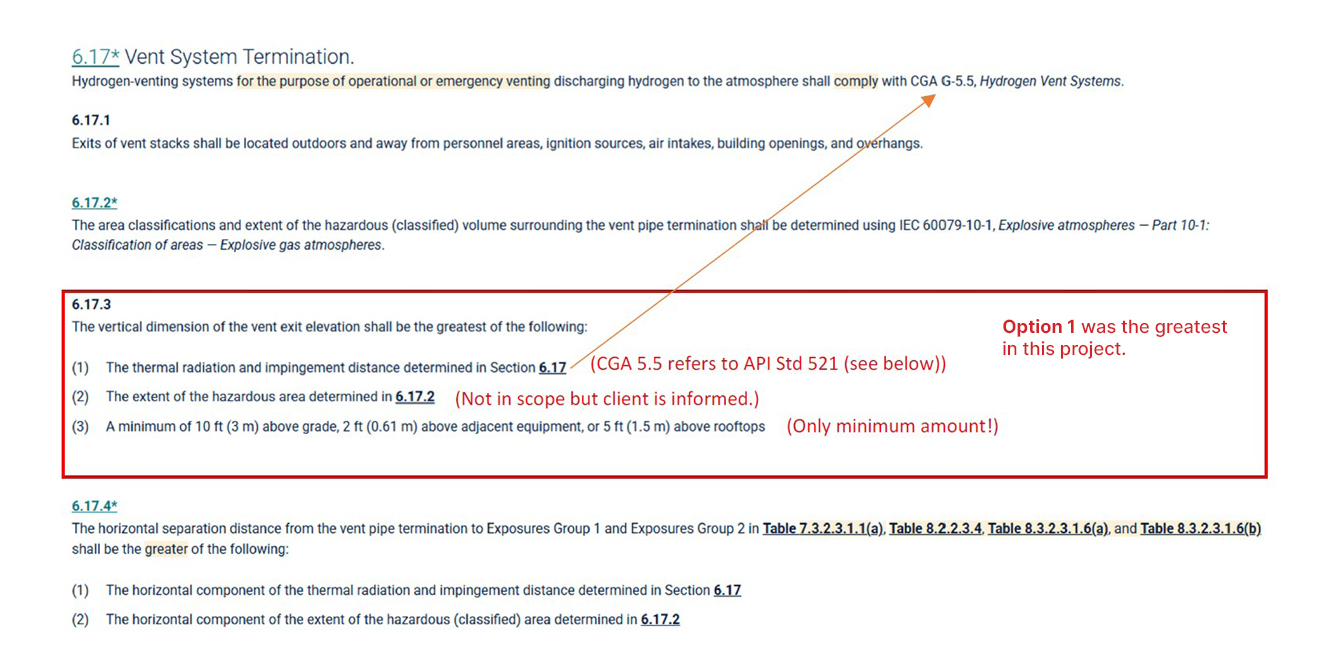
As seen in 2026 NFPA 2:
Using API 521 (C.2 Example 1 – Sizing a flare stack), the following can be calculated:
- Heat Release in case of ignition.
- The distance from the midpoint of the flame to a given thermal radiation intensity at an object.
- Flame length (see equation in Pipe Specification reference or API 521 Figure 7).
- Approximate flame distortion due to lateral wind on jet velocity from a flare stack (API 521 Figure 9).
- Required flare stack height.
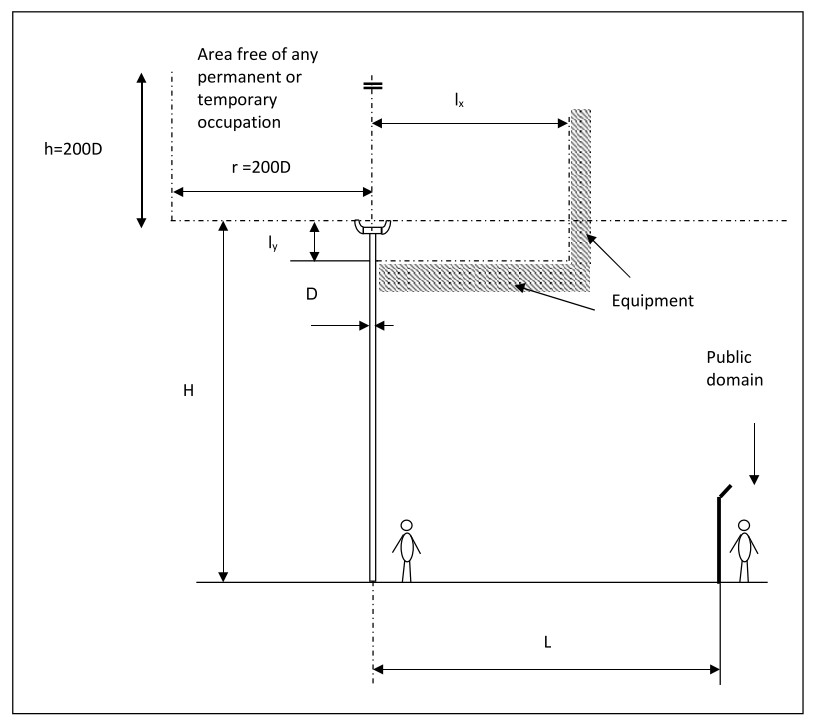
The reference pipe specification also gives an estimate for safety distances as a function of flow rate.

| Q [Nm3/h] | H [m] | Ix [m] | Iy [m] | L[m] |
|---|---|---|---|---|
| 5000 | 6 | 4.7 | 0 | 8.5 |
| 10000 | 6 | 6.6 | 0.1 | 11.9 |
| 15000 | 6 | 8 | 0.3 | 14.5 |
| 20000 | 6 | 9.3 | 0.5 | 16.8 |
| 30000 | 6.4 | 11.3 | 0.8 | 20.5 |
| 50000 | 8 | 14.5 | 1.3 | 26 |
| 100000 | 11 | 20 | 2.4 | 37 |
| 200000 | 16 | 28 | 4 | 52 |
Physical Vent Design Considerations
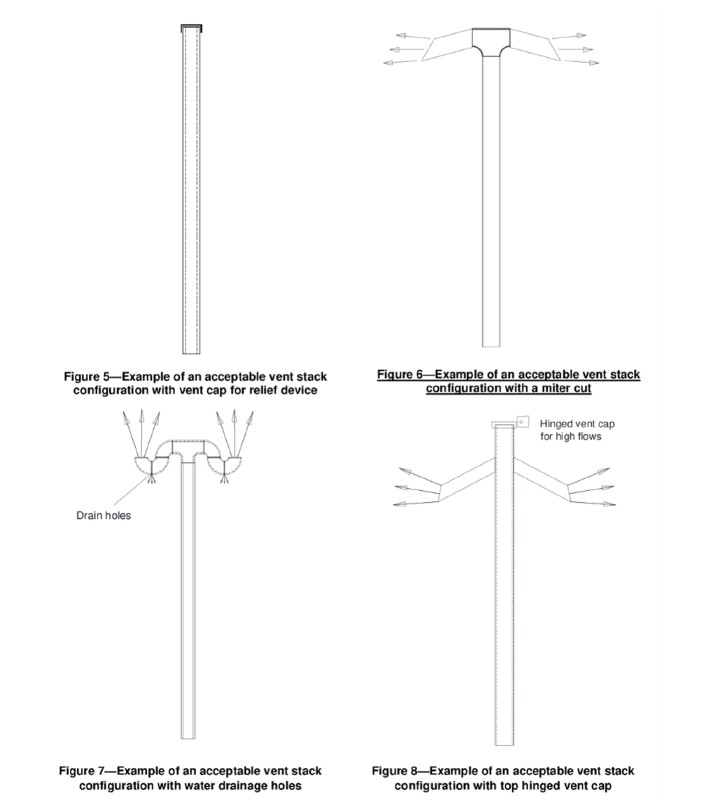
- JNE suggested vent exit to be cut at a miter angle with bird screens. Other acceptable designs (shown below) are designed to prevent entrance of rain, snow, and other debris into the vent and shall not direct vented gas downwards. CGA G-5.5 -2021: 6.2.9 Vent Exists
- Warning signage around the vent should include the following:
- Hydrogen, flammable gas
- No smoking or open flames
- Potential thermal radiation exposure hazard
- Allow 12” typical distance clearance at base of vent stack for snow and ice accumulation and removal. CGA G-5.5 -2021: 6.2.4 Discharge of warm gas
Limitations
Material Specification
Hydrogen embrittlement is a concern when specifying compatible materials for hydrogen systems.
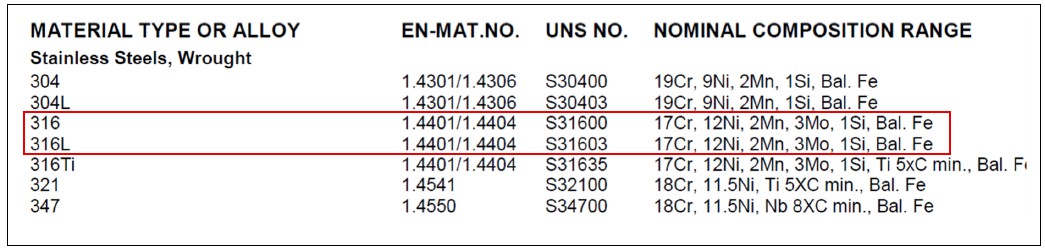
Typical materials used on hydrogen system piping are austenitic (300 series) stainless steels conforming to ASME B31.12. Single-wall, uninsulated 304 SS is specifically mentioned in CGA G-5.5 -2021: 6.2.13 Materials. However, 316/316L SS is one of the most resistant to hydrogen embrittlement due to higher nickel content (see training document in references).
Pipe Thickness
Schedule of pipe can be determined after performing a minimum wall thickness calculation in accordance with ASME B31.12. However, it is important to consider the role of height and bracing supports on the vent line.
For this project, schedule 10S was sufficient according to the minimum thickness calculations. However, due to the height of the vent and the lack of support required (as per civil), the final suggestion was to implement schedule 40S as precautionary measure.
Safety Distances
- Ensure area 200D X 200D above vent exits remains free of any permanent or temporary occupation.
- Keep a distance of Lx and Ly from the vent exit to other equipment.
- Thermal radiation distances should be accounted for in the vertical height calculation and therefore the design may allow for personnel to operate around the base of the vent.