


Chlorinated Polyvinyl Chloride (CPVC) Piping
Chlorinated Polyvinyl Chloride (CPVC) Piping
Published August 2026
Keywords
Share
Summary
CPVC (chlorinated polyvinyl chloride) is a thermoplastic piping material made by chlorinating standard PVC resin. It is commonly used in residential and commercial applications like hot and cold potable water distribution, fire sprinkler systems, industrial fluid transport, and HVAC systems.
CPVC piping has many benefits when used properly including corrosion and chemical resistance, superior heat resistance, ease of installation, and cost-effectiveness. However, its performance and reliability depend on proper system design, installation, and adherence to manufacturer specifications and requirements.
Project Case/Example
Investigations into CPVC piping have revealed that issues leading to failure often begin with disregard for the pipe manufacturer’s installation recommendations and poor workmanship.
These oversights combined with misinformation can cause significant issues if individuals are not aware of and reminded about common issues to watch out for. While there may not be a specific case to serve as a basis for this document, the intention remains the same: sharing knowledge, solutions to problems, and best practices so that we can produce the best possible work.
Codes and Standards
The specification covers CPVC Schedule 40 and Schedule 80 Pressure Pipe and Fittings.
NOTE: Latest revision of all standards applies.
The Ontario Building Code (OBC), specifically Part 7 (Plumbing), governs CPVC pipe, requiring it and its fittings/solvents to meet specific CSA standards, notably CSA B181.2 for DWV (Drain, Waste, Vent) and CSA B137.6 for pressure applications, ensuring compliance for temperature/pressure (hot water, high temp) and use in specific building types (e.g., residential, underground), with recent updates (2024/2025) clarifying uses and referencing National Plumbing Code (NPC) standards for harmonization.
Key Code References
Solution/Best Practice
To ensure the longevity and reliability of CPVC piping systems, it is necessary to design the system according to the material’s specific requirements. By following the manufacturer’s requirements, specifications, and regulations, we reduce the risk of issues within the system. While smaller details can be easy to overlook, they are critical to successful design, and awareness of common failure causes helps prevent them. This section will highlight common issues when using CPVC pipe along with suggested solutions and best practices.
Thermal Expansion
Issue: CPVC has a high coefficient of linear thermal expansion, approximately 63 – 66.6 x . Because of this, temperature changes can lead to pipe movement, which in turn can cause stress in joints, warping or deformation, and eventually system failure. E.g., Given a 100 m CPVC pipe subjected to a 100 temperature increase, the pipe will expand to around 100.666 m.
Solutions:
- When designing the system, include expansion loops, offsets, and/or oversized bracket guides.
- Design the system to allow for axial movement at the guides.
Best Practices:
- Always calculate expansion for expected temperature ranges.
- Avoid rigid anchoring so as not to prevent movement.
Remember: Outdoor CPVC piping will experience significant thermal expansion and contraction due to temperature swings. When designing outdoor systems using CPVC, be conscious of the climate and adjust accordingly.
Connections
The most common method of connecting CPVC piping is solvent welding, or solvent bonding which is a chemical process that fuses thermoplastic pieces together using a compatible solvent cement. However, this type of connection cannot always be used. To attach valves or connect to metal piping, threaded or push-to-connect fittings are used.
Issue: Threaded connections on CPVC pipes can crack if overtightened or improperly sealed, and are not recommended for certain systems, as threaded plastic weakens the joint.
Solutions:
- Use other joint types if possible (e.g., flanged, solvent-cemented).
Best Practices:
- Avoid threaded connections in the main system when feasible.
- Minimize use of threaded connections in high-stress areas.
CPVC Piping Supports
Issue: CPVC piping is very flexible and requires support placed at specific intervals depending on the pipe diameter, wall thickness, and operating temperature. Improper piping support placement can result in sagging, cracks, joint stress, or deformation. CPVC piping support spacing depends on pipe diameter, wall thickness, and operating temperature.
The figures below show the horizontal support spacing; vertical supports are typically placed at 10-foot intervals.
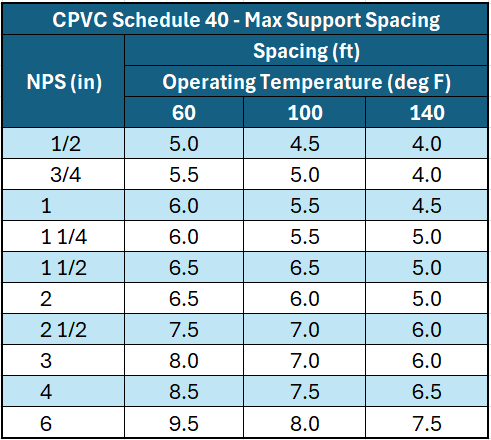
Figure 1. CPVC SCH 40 – Pipe Support Spacing*
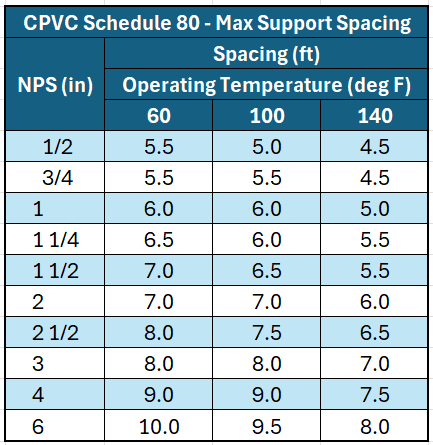
Figure 2. CPVC SCH 80 – Pipe Support Spacing*
Solutions:
- Follow CPVC piping support standards that outline support distance based on pipe size and temperature.
- Use correct supports and hangers designed for plastic pipe.
- Avoid point loads.
Best Practices:
- Ensure support systems are designed with fluid weight and temperature in consideration as well as CPVC piping support standards.
- Use the correct supports (e.g., guides vs anchors) to allow for thermal expansion and contraction movement.
Chemical Vulnerabilities
Issue: CPVC piping is resistant to most strong acids, bases, and salts. However, it is vulnerable to degradation when exposed to certain oils, organic solvents, and incompatible construction materials, which may cause brittleness and environmental stress cracking (ESC).
- Common CPVC incompatibilities include spray foam insulation, plasticizers (e.g., in flexible wire coatings), solder flux, and certain solvent cements.
Best Practice:
- Always verify compatibility using chemical resistance charts, manufacturer data, or other available resources.
- Design systems to avoid exposure to any present incompatible oils, organic solvents, or construction materials.
Solutions:
- Specify approved sealants, lubricants, and insulation materials, do not assume it is implied.
- Review system chemicals and cleaning agents if known.
Pressure and Temperature
Issue:
- Sudden closure of a valve or pump operation causes pressure spikes that have the potential to crack CPVC.
- Exceeding temperature and/or pressure limits significantly reduces the strength and integrity of the pipe.
- CPVC piping pressure ratings depend on the operating temperature, pipe size, and wall thickness (e.g., SCH 40, or SCH 80).
The operating pressures below are based on the hydrostatic design of the pipe using water at 73 as the test medium.
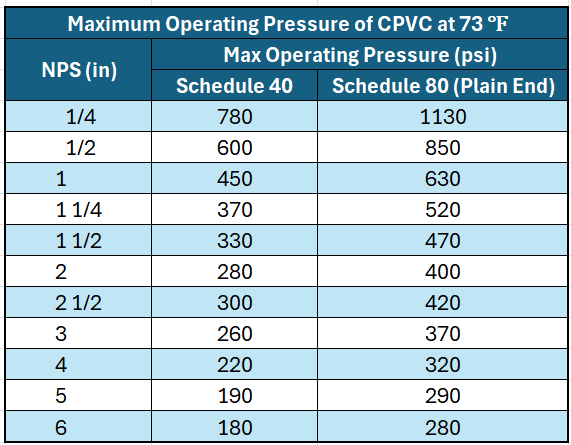
Figure 3. Max Operating Pressure (psi) of CPVC at 73 *
Because CPVC is a thermoplastic, the maximum operating pressure will be reduced as operating temperature increases. To calculate the reduction, multiply the operating pressures from the chart above by the relevant correction factor below:
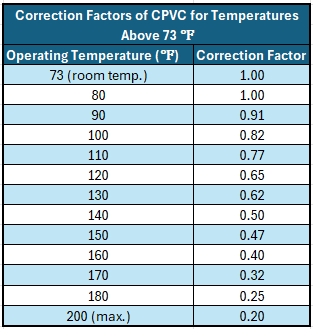
Figure 4. Correction Factors for Temps Above 73 *
For example, the operating pressure for 6” SCH 80 CPVC piping is 280 psi at 73 . If the operating pressure is 140 , the maximum operating pressure is now only 140 psi (280 x .50).
Solutions:
1.
- Install air chambers or surge arrestors in the pipe system and use slow-closing valves if possible.
- Design the system to minimize sudden changes to flow.
2.
- Verify pressure and temperature ratings from the manufacturer.
- Use derated/correction factors for temperature (Figure 4).
Best Practices:
- Never design a system at maximum limits; always have a safety margin.
- Check design conditions against worst-case scenarios.
Fire & UV Resistance
CPVC piping is highly fire-resistant and does not support combustion. In extreme heat or direct flame, it will char but will not drip, melt, or sustain a flame. Due to the high chlorine content, these pipes are self-extinguishing.
Issue: CPVC handles sunlight and heat far better than its cousin PVC; however, prolonged, direct exposure to sunlight and UV can eventually cause the surface to oxidize, discolor, and become brittle. Short-term exposure during installation is typically harmless but if the CPVC piping is used for permanent above-ground outdoor plumbing, it should be protected from UV rays.
Solutions:
- Paint the pipe with a water-based latex or polymer paint.
- Wrap the pipe in a protective sleeve or non-transparent insulation.
- Use a protective cover.
Best Practices:
- Assume all outdoor CPVC pipes need UV protection.
*This data is based upon information provided by the raw material manufacturers and online resources. It should be used only as a reference and not as a guarantee of performance. Installations must comply with local plumbing codes and regulations.