

News

Owner’s Engineer
As an owner's engineer, JNE Consulting builds an understanding of your project goals, needs, and timelines, ensuring your project is executed to meet your requirements.
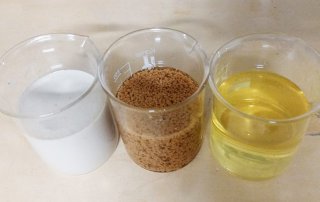
Cutting Costs on Cutting and Drilling Fluids Disposal
Cutting and drilling fluids contain a variety of oils and emulsifiers that make wastewater difficult to treat once the fluid is no longer usable. As a result, fluids are often disposed of as hazardous waste, incurring high operating costs to your company. JNE Environmental has developed a process that allows you to treat this wastewater at your own plant, leading to significant cost savings.
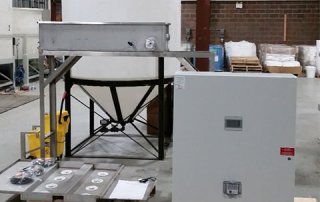
Oil Removal Package Optimizes Stamping Plant’s Existing Wastewater Treatment System
A local stamping and manufacturing plant approached JNE Environmental to supplement their existing wastewater treatment system. The existing system was very maintenance intensive due to the high oil content in the wastewater. To reduce the load on the existing system, we custom-designed an oil removal package by combining multiple oil recovery methods.
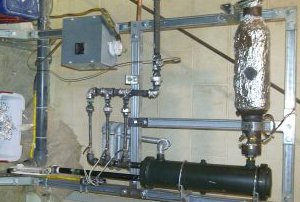
Pilot Plant Achieves Complete Destruction of Airborne VOC
A customer that makes a resin used in everything from billiard balls to countertops needed help removing high concentrations of volatile organic compounds (VOC) from their air emissions. Using the resources at our Burlington facility, we custom-designed, built, and operated a high-temperature catalytic oxidation Pilot Plant to test its effectiveness in treating hazardous air pollutants.
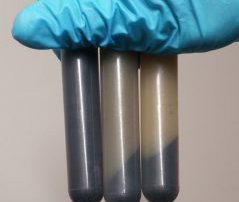
Custom Formulations to Maximize Solids Separation
A company that processes and digests food wastes was not able to remove enough solids from their incoming slurry prior to entering a large centrifuge. This resulted in process instability in their anaerobic digester system. JNE has since tested a new dry polymer product tailored to the separation of high solids wastewater for anaerobic digesters.

Advance Steel Academy — JNE to present at Graitec’s annual event
JNE will be presenting at Graitec’s Advance Steel Academy in Atlanta, Georgia in April 2020. The annual event, beginning in 2015, is a crash course in Autodesk Advance Steel software for both amateurs and experts from across North America.
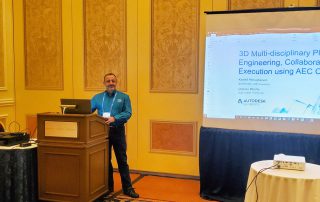
JNE presents at Autodesk University Las Vegas 2019
The JNE Group of Companies recently took the stage at Autodesk’s premiere North American conference in Las Vegas, Nevada. Selected from over 2,400 international submissions, JNE’s presentation centered on our utilization of the Autodesk Architecture, Engineering, and Construction (AEC) Collection to deliver a complete, complex multi-disciplinary 3D design to our clients.
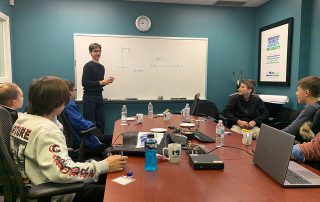
Take Our Kids to Work Day at JNE
On November 6, 2019, The JNE Group of Companies welcomed Grade 9 students to learn more about careers for national Take Our Kids to Work Day. This day is Canada's most recognized career exploration event, with an estimated 200,000 students visiting workplaces every year.